Can multiple pets share a dog bed? Practical advice and precautions.

In multi-pet households, caregivers often encounter a real and endearing scene: the cat sneaks into the dog bed and claims the spot, while the dog waits helplessly nearby. This raises the question—can dogs and cats share a dog bed?
I used to have a timid kitten and a rather docile medium-sized dog, and they often fought over the same bed. Later, I learned to observe their interactions on the bed and then adjusted the size and material of the bed so that both of my furry friends could comfortably and peacefully share the sleeping space.
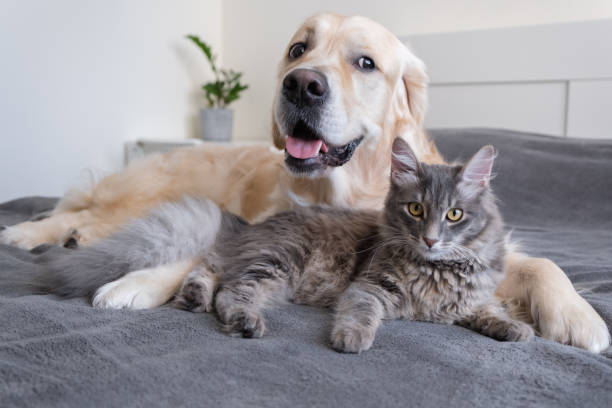
Benefits of multiple pets sharing a bed
While dog beds are primarily designed for dogs, many cats also love their spaciousness, warmth, and sense of security. Sharing a bed offers several clear advantages:
Increase feelings of security (especially with pets with whom you have a close relationship).
If your cat and dog get along well, sharing a bed can help:
Reduce separation anxiety
Building a sense of security in the community
Increase intimacy
Increase mutual tolerance
Especially when adoptive families or new pets join, sharing a dog bed can establish a psychological foundation of “we are one family.”
Save space and budget
For small families, having multiple pet beds can take up space and increase the budget, while having both pets share a bed can reduce expenses.
Reduce competition for resources
Some pets don’t share beds because they enjoy it, but because resources are limited. Providing enough beds reduces competition, and beds, as “shared spaces,” can foster balanced interaction.
Potential risks of multiple pets sharing a bed
While shared beds are appealing, they also present some issues that cannot be ignored.
Body size differences may cause pressure and discomfort
Dogs are usually much larger than cats.
When a large dog sleeps in bed with a small, nimble kitten, the following will happen:
The cat was pinned down by the dog.
The dog accidentally bumped into the cat.
Unable to turn over freely
decreased sleep quality, especially when large dogs use dog beds, as they may feel stressed about not having a safe space nearby.
Health problems: fleas, skin diseases, respiratory infections
Sharing a bed with multiple pets may lead to the spread of diseases.
fleas, ticks
Fungal or skin infection
bacteria
Respiratory infection
Especially kittens or older dogs with weak immune systems.
Therefore, families sharing a bed must increase the frequency of cleaning.
Territorial issues
Cats typically have a stronger sense of “personal space.”
If a cat considers the bed its territory, a dog might be chased away. And vice versa.
It manifests as:
Howling, growling, staring, sudden slapping, and unwillingness to share—when pets start to show obvious conflict, sharing a bed is not suitable.
Different sleep preferences cause discomfort
Cats and dogs have different sleeping habits:
Cats like beds that allow them to curl up, hide, and have a framed feel.
Dogs like to stretch out, snuggle, and have plenty of space.
If the bed is designed to fit only one person, the other person will feel uncomfortable after sleeping in it for a long time.
Under what circumstances can dogs and cats share a dog bed?
Not all families are suitable for sharing a dog bed. If two or more of the following conditions are met, sharing a dog bed is generally safe and comfortable.
The two pets have a good relationship and no history of fighting.
If they are frequent:
Sunbathing together, grooming each other, spending time on the sofa together, and being around each other without anxiety, sharing a dog bed is generally not risky.
The dog bed is large enough and supportive enough to accommodate two people at the same time.
A dog bed must meet the following requirements:
The dog won’t roll over onto the cat while sleeping in it.
Both can stretch naturally
The material should not collapse (memory foam is best).
The bed is sturdy enough that it won’t tilt when pressed.
The larger and more supportive the bed, the more suitable it is for sharing.
Healthy, free from disease, and with established immunity
If your cat or dog is:
Scratching
flaking
cough
There are fleas
Dogs share a bed at this time.
Safety and health are the top priorities.
A dog bed suitable for multiple pets?
If you want your pets to share a dog bed, you must choose a dog bed that caters to the needs of both animals.
1. The size must be one size larger than a “single bed.”
Suggested reference:
| Pet combination | Recommended bed size |
| puppy + cat | M–L |
| Medium-sized dog and cat | L–XL |
| Large dog and cat | XL–XXL |
It’s better to buy a large one than a small one.
2. Choose memory foam or high-density foam to prevent collapse.
A collapsed dog bed can cause:
A large dog crushed a cat.
Cats can easily roll under dogs.
Both of them have worsened sleeping postures
shortened bed lifespan
Memory foam mattresses can maintain a flat, stable, and safe surface.
3. The styling (bolster) should be low and stable.
Cats like to lean against the frame, and dogs like to rest their heads on the frame, but the frame can’t be too high, otherwise:
The dog couldn’t get over it
The cat’s movements were not smooth.
Both are prone to generating stress during use.
Low bezel ≠ no bezel; the key is “reliable and comfortable to use as a pillow.”
4. The material should be scratch-resistant, bite-resistant, and easy to clean.
Cats like to scratch, and dogs like to bite; therefore, a bed must:
The jacket is removable and washable.
Scratch-resistant and wear-resistant
Fill without clumping
It does not easily attract hair
Recommended cleaning frequency: once a week, deep wash once a month.
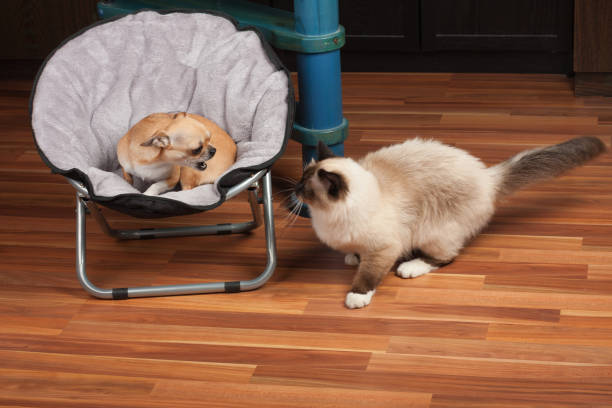
How should families with multiple pets sharing a dog bed manage their pets?
Here are some very practical pet care tips.
A minimum of one more dog bed must be provided.
For example:
1 dog + 1 cat → at least 2 beds
1 dog + 2 cats → at least 3 beds
In this way, even if they are willing to share, they will never have the anxiety of “not being able to get it.”
2. Use a combination of “shared area + individual private area.”
The most recommended method is
Place a large bed as a shared bed
Each person will be provided with a small, independent bed.
so:
Cats have their own territory
Dogs also have their own resting place
Shared beds have become an “option” rather than a “must-compete” option.
3. Observe whether there are any situations where sharing is forced.
If you see:
The cat was curled up in a ball while sleeping.
The dog dared not lie down
One pet was clearly nervous.
This is not “sharing” but “compromise.”
The number or placement of dog beds must be adjusted immediately.
4. Keep your bed clean to reduce health risks.
Families with multiple pets must:
Wash bedsheets weekly
Monthly deep cleaning
Regular deworming
Regular brushing reduces allergens
,Health issues are the biggest risk associated with sharing a dog bed , and cleanliness is key.
Conclusion:
Whether dogs and cats can share a bed depends not on the type of pet, but on:
Their relationship, whether the dog bed is large enough, whether the material is supportive enough, whether their health permits it, and whether the cleaning is thorough.
When you provide enough space, a suitable dog bed, and individual choices for each pet, sharing a dog bed can actually become a “family bond” that helps them get along better.
Want more comfortable sleep for your pets? Choose a sturdier, larger, and more supportive dog bed so they can all enjoy a safer sleeping space together.