Establish a bedtime routine with your dog: dog bed + petting + soft music

In today’s fast-paced life, dogs, just like us, need a comfortable and regular bedtime routine. This not only contributes to their physical and mental health but also strengthens the bond between owner and dog. Today, let’s talk about how to create a warm and ritualistic evening using a dog bed, petting, and soft music.

Why do we need a bedtime ritual?
Many people may think that dogs don’t need a fixed bedtime routine and that just providing them with a bed is enough. However, a regular bedtime ritual is actually very important for a dog’s mental health:
Relieving anxiety: A consistent bedtime routine lets your dog know it’s time to relax and get ready to sleep, which helps reduce separation anxiety or nighttime barking.
Improve sleep quality: Just like humans, dogs also need to enter deep sleep. Relaxation before bedtime can help them enter a calm state more quickly.
Strengthening the bond: Through petting and gentle communication, dogs feel safe and valued, which enhances their trust.
My own dog would go to its dog bed every night, and if there wasn’t a bedtime routine, it would often wake up barking in the middle of the night or even pace around on the bed. Since I started establishing a regular bedtime routine, I can now sleep soundly through the night, and I sleep much better too.
Step 1: Choose a suitable dog bed
The first step in a bedtime routine is to provide your dog with a comfortable dog bed. Here are a few things to keep in mind:
The right size: A dog bed should not be too big or too small. Too small will make the dog feel cramped, while too big will make the dog feel insecure.
Comfortable Material: Soft, breathable, and easy-to-clean materials are ideal for bedtime use. Especially in winter, consider a dog bed with warmth features.
Quiet location: Place it in a corner of the bedroom or within the owner’s line of sight to make the dog feel safe and avoid a noisy environment that may affect its sleep.
Tip: My dog uses a semi-enclosed dog bed, which he can curl up in while still seeing me. This design makes him feel safe and not lonely.
Step Two: Touching and Soothing
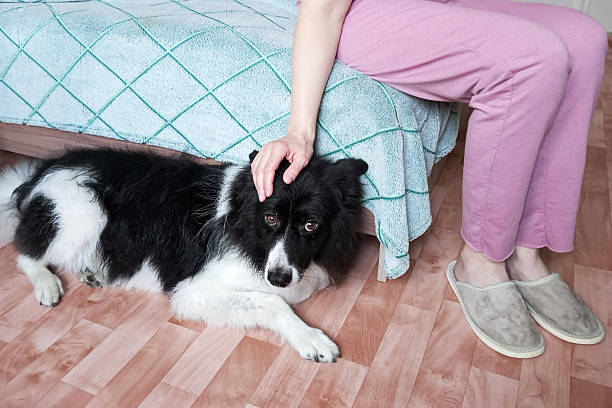
Getting into the dog bed, the second step is petting and comforting. Petting is not only a form of affectionate interaction but also a way to relax physiologically:
Gentle back stroking: Gently stroking along the spine can help relax your dog’s muscles.
Gently rub behind the ears: Many dogs like their owners to rub their ears, as this releases happy hormones and relieves anxiety.
Brief whispers or soft voices: Speaking in a gentle tone allows your dog to feel your presence and a sense of security.
I usually sit by the dog bed for 5-10 minutes, gently stroking it and softly chatting about the day, or simply saying “goodnight.” It will slowly relax, and its eyelids will start to feel heavy.

Step 3: Use soft music to help you relax
Studies show that music can also have a relaxing effect on dogs, especially light music or classical music:
Slow-paced melodies help lower heart rate and calm the dog down.
Avoid high-frequency and harsh sounds: Rock or loud music can easily stimulate the nerves and make it harder to fall asleep.
Control the volume: Keep the volume low so that your dog feels comfortable and is not frightened or distracted.
I prepared a playlist for my dog, mostly containing piano music or light music, and played it for about 20 minutes every night. Amazingly, as soon as it hears the music, it crawls into its dog bed and slowly closes its eyes.
The importance of establishing patterns
Any bedtime routine needs to be consistent. Dogs are habit-driven animals; once a routine is established, they will automatically enter “sleep mode.”
Fixed time: Try to start your bedtime routine at the same time every day to establish a regular biological clock.
Establish a consistent sequence of actions: first guide the dog into the bed, then pet it, and then play music. This consistent sequence will enhance the sense of ritual.
Avoid distractions: Minimize stimulation before bedtime, such as toys or noise from outside, so that your dog can focus on relaxing.
I’ve found that a regular bedtime routine not only helps my dog sleep better, but it also allows me to rest peacefully at night without worrying about being woken up in the middle of the night.
Experience sharing
If your dog is uncooperative at first, don’t be impatient. You can use treats as a transition to help your dog associate “dog bed + petting + music” with a pleasant experience.
For older dogs, you can extend the petting time to make them feel safe and comfortable.
For newly adopted puppies, you can stay by their side initially to help them gradually get used to the dog bed and bedtime routine.
My friend’s dog used to be very easily stressed, but through playing soft music and petting it before bedtime every day, it can now not only sleep soundly but also behave more relaxed and happy during the day.
Summarize
A warm bedtime routine is more important to a dog than simply sleeping. With a comfortable dog bed, gentle stroking, and soft music, you can create a safe and relaxing night for your dog while strengthening your emotional bond.
Starting tonight, try to establish a bedtime routine for you and your dog so that every night is filled with warmth and peace.