Dog bed area for remote work scenarios: Creating an efficient and reassuring homework environment

As remote work becomes an increasingly common part of life, many dog-owning families are facing the same problem: their dogs constantly surround them at work, barking, whining, and seeking attention, severely impacting their concentration. To balance efficiency and companionship, more and more families are choosing to create a quiet
dog bed area in their study or work corner—allowing their dogs to rest peacefully while allowing them to focus on their work.
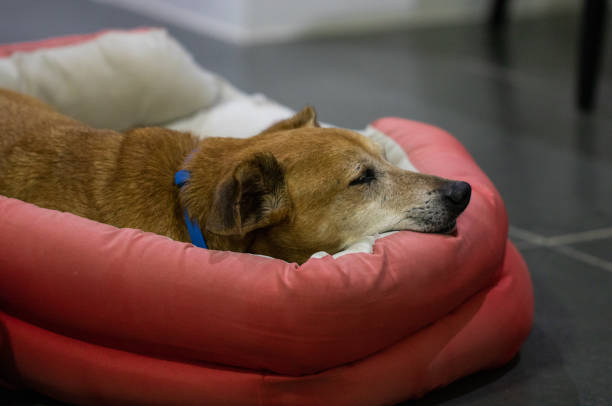
Why is a quiet area necessary for remote work?
1. Avoid meeting interruptions and improve focus.
With a stable space, dogs can develop a habit: when their owner is working, they go to their dog bed to rest.
This not only reduces barking and leg-pawing from dogs but also prevents them from interrupting your video conferences.
2. Provide your dog with a sense of security and a designated space of its own.
A dog bed is more than just a bed; it’s a dog’s “private space.”
When placed in a designated area, the dog feels that it’s “its own home” and is more likely to feel secure there.
3. Reduce separation anxiety
Being in the same space, but not with 100% companionship, will allow dogs to gradually learn self-sufficiency and help improve mild separation anxiety.
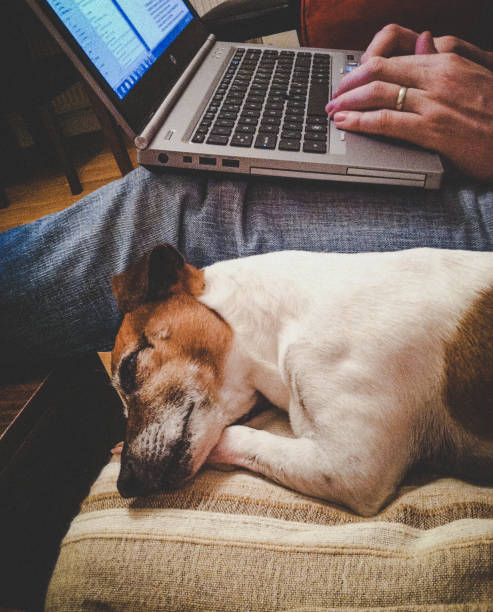
When I first started working remotely, my dog kept lying next to my keyboard and nudging me, which made it impossible for me to work for half the day. Later, I set up a designated area for him and did some simple training, and he was much more willing to sleep there, which significantly improved my work efficiency.
How to choose the best location?
Choosing a quiet location is the most crucial step in the entire design process.
1. Not near the doorway or the aisle.
People coming and going at the entrance can turn the dog bed area into a “warning zone,” making the dog easily nervous and bark.
2. Don’t stray too far from you
The dog bed entirely in another room will cause anxiety for the dog, making it constantly run out to find you.
Ideal location: a “secluded corner” next to, behind, or next to your desk or bookshelf.
3. Optimal spatial characteristics
Low noise
Sufficient ventilation
Not exposed to direct sunlight
Do not install radiators (they are prone to overheating).
Choose the appropriate one
1. Choose one with a strong sense of coverage
Examples include U-shaped edge protection, wraparound design, and cave-like design.
Advantages:
Isolate environmental interference
Make your dog feel more at ease
Ideal as a quiet core object
2. The size should be just right, not too big.
An oversized dog bed can reduce a person’s sense of security. A more suitable option for a work environment would be:
The dog curls up perfectly.
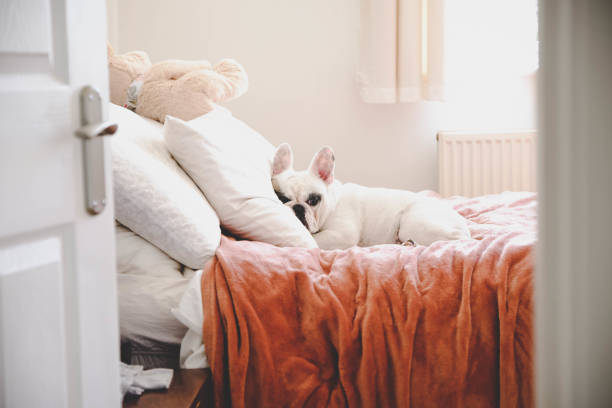
It won’t extend too far beyond the edge when stretched.
3. Sound-absorbing materials are very important.
Soft cloth, a non-slip bottom, and no plastic friction noise can all reduce background noise during your video conferences.
4. Not too soft and not too hard.
Based on the relevant content, I will provide a professional explanation here:
A dog bed that is too soft will make puppies or small dogs feel unsupported.
A dog bed that is too hard is uncomfortable, and dogs won’t stay in it for long periods of time.
The best choice is a dog bed with a soft pad and a support base, suitable for dogs of all sizes to lie down while at work.
How to set up a quiet dog bed area?
1. Dog bed + soft lighting + small partition = a complete and quiet corner
The simplest combination:
A comfortable dog bed
A soft nightlight (reduces anxiety in the dark)
Small partitions or potted plants form boundaries
This way, it’s neither closed off nor lacking in separation.
2. Add a familiar-smelling cloth or toy.
Make the dog bed feel more like “home,” and your dog will be more willing to stay there.
3. Anti-slip treatment for the ground
under the dog bed so that the dog won’t slip when it gets in and out, and it won’t make any noise.
4. Place the dog bed in a location where it is within sight.
If the dog can see you and you can see it, you can achieve “companionship without excessive dependence.”
Training tips to get your dog to stay put in the dog bed area
Having an area isn’t enough; the dog must be “willing” to go in.
1. Positive reinforcement: rewards + commands
Step-by-step guidance:
Lead the dog to the dog bed
Send the command “go to bed” or “go to your nest.”
They give you snacks as soon as you go in.
Wait 1-2 minutes before rewarding
If you persist for a few days, the effects will be immediate.
2. Do not use the dog bed as a punishment area.
Once the dog bed is associated with “standing as punishment,” the dog will not want to go there.
3. Adhere to rules during office hours.
When you are working:
Do not call the dog
Infrequent interaction
Whisper praise when your dog stays quietly in the dog bed.
This way it will know that “lying in the dog bed = rest time = good things.”
Designed for different dog types
1. Puppy
Choose soft-coverage type
Add some teething toys
closer to reduce its anxiety.
2. Small and medium-sized adult dogs
Medium hardness, breathable material
The position is slightly away from the desk.
You can add light music or white noise.
3. Large dogs
dog bed with better support.
Leave enough space for it to stretch
The ground subbase is more important
4. Dogs with anxiety tendencies
Cave-type dog beds preferred
Deepen coverage
Use a comfort blanket
Conclusion:
Efficient office
Reduce interference
Extend the dog’s nap time
Reduce anxiety and increase stability
Improve the relationship between humans and pets
With proper setup, a dog bed can not only be a resting space for your dog but also an indispensable part of your remote work life.