Advantages and disadvantages of placing a dog bed against a wall: helps the dog find the best resting spot.

Many dog owners habitually place their dog beds against a wall, believing it saves space and makes their dogs feel more secure. But do you really understand the advantages and disadvantages of placing a dog bed against a wall? This seemingly simple layout actually directly affects the quality of your dog’s rest, behavioral habits, and even the cleanliness of your home environment.
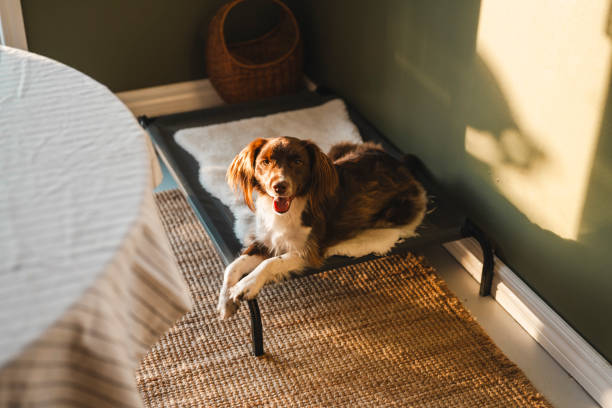
Advantages of placing it against the wall
1. Enhance the sense of security
Dogs naturally prefer resting spaces with a sense of security. Placing a dog bed against a wall creates a natural sense of enclosure, making them feel safer and more relaxed while resting.
When my Golden Retriever first came to us, he was a bit timid and always liked to sleep in a corner against the wall. I tried putting the dog bed in the center of the room, but he would always feel uneasy going in and would only feel at ease resting against the wall.
2. Saves space and facilitates home layout.
Placing a dog bed against the wall not only doesn’t obstruct movement but also blends seamlessly with furniture, making it especially suitable for small apartments.
In the corner of the living room, next to the bed in the bedroom, or in a corner of the study, you can use the wall to create a “natural partition” and make the dog bed a separate little space.
To prevent the dog bed from becoming an obstacle in the family walkway, reduce the risk of collisions and trampling.
3. Prevent slippage
If the dog bed is not heavy enough or the bottom is made of a smooth material, placing it against a wall can increase stability and prevent it from sliding when the dog is getting up or down or digging in the bed.
4. Improve the quality of rest
A dog bed placed against a wall typically reduces external disturbances, making it easier for dogs to enter a deep relaxation state while sleeping or resting. This arrangement is especially beneficial for nervous or easily startled dogs, significantly increasing their willingness to use the bed.
Potential disadvantages of placing it against the wall
1. Poor air circulation
Being placed close to the wall may affect air circulation, especially in high humidity or near heating in winter.
Poor ventilation over a long period of time can lead to the growth of bacteria and unpleasant odors inside.
Dogs that are sensitive to fur care may develop skin problems.
I used to place the dog bed close to the wall under the window. In winter, when the heating was on, the temperature next to the dog bed was too high. After a few weeks, I noticed that the dog would occasionally scratch it. Later, I adjusted the distance and ventilation, and the situation improved significantly.

2. Increased cleaning difficulty
The dog bed against a wall may make it difficult to clean the area behind it, as shedding and dust can easily accumulate, requiring regular relocation or vacuuming.
3. Difficulty getting the dog in and out of the car.
Some corner spaces against the wall are narrow, and if the wall forms an angle with other furniture, dogs may not be able to move freely up and down or turn around, especially large or older dogs, which may cause discomfort.
4. Material and temperature affect the feeling.
Cold walls (such as brick or cement walls) may lower the local temperature of a dog bed, affecting its comfort in winter.
A hot wall (such as one near a radiator) can make a dog bed too hot, which can easily cause heatstroke in dogs or make them unwilling to enter in the summer.
How to choose the best location to place against a wall
1. Pay attention to ambient temperature and humidity.
Avoid placing the wall too close to a cold wall or heat source.
Keep the air around the dog bed
2. Leave enough space for movement.
Ensure the dog can move freely up, down, and turn around.
Especially for medium- to large-breed dogs or senior dogs, extra space is needed to avoid pressure on their joints.
3. Choose the appropriate material
dog beds placed against the wall, you can choose a removable and washable fabric cover or a non-slip base.
For small dogs, a light to medium weight is sufficient; for large dogs, a moderately heavier base will provide more stability.
4. Regular cleaning and inspection
Check the back of the dog bed weekly for dust accumulation.
Regularly move or clean with a vacuum cleaner
Dog’s temperament and adaptability to being placed against a wall
Timid and sensitive dogs
More accepting of wall-mounted layouts
They will actively regard the dog bed as a safe little nest.
Lively and active dog
You might need some open space to avoid feeling “confined.”
You can choose to place it against the wall but leave space for entrances and exits.
Senior dogs or dogs with mobility issues
A wall-mounted layout helps support the body
However, avoid placing the furniture too close to the walls, as this can make it difficult to move up and down.
Practical suggestions for placing against the wall
Lightweight dog bed with a solid wall for added stability
Large dogs should choose a heavy-duty base to ensure safety and stability.
Adjust the position regularly to avoid air stagnation.
Provide sufficient space for senior dogs to move around.
Insulating and non-slip mats can be laid on the walls to improve comfort.
My dog is very active and initially didn’t like sleeping against the wall. But I put a slightly larger, sturdy dog bed against the wall with a soft mat and some space on it, and he quickly accepted it. Now he crawls into it every night to sleep, and I feel very safe there.
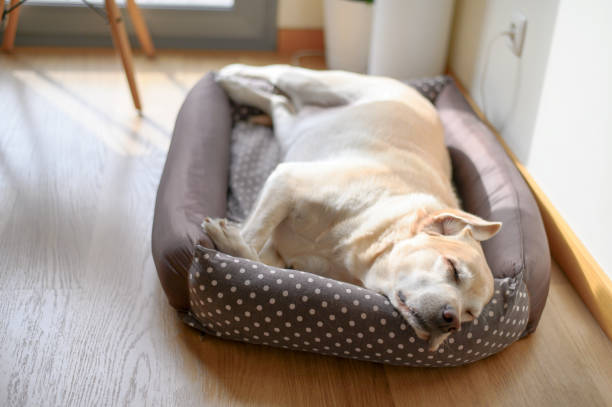
Conclusion:
Placing it against a wall is not simply a matter of spatial arrangement; it involves:
sense of security
Comfort
usage habits
Clean and tidy space
Making good use of the wall space, while also paying attention to air circulation, activity area, and material selection, will help your dog truly love their dog bed. Help your dog find their ideal resting corner so they can rest peacefully and comfortably every day.