Dog bed edge height on the cervical spine: a key to sleep health you might be overlooking.

When choosing a dog bed, many pet owners focus on the material, size, warmth, and waterproofness but rarely consider the impact of the bed’s edge height on the cervical spine. However, this seemingly insignificant detail often determines whether a dog truly relaxes while sleeping, whether it experiences long-term neck discomfort, and even affects its overall sleep quality.
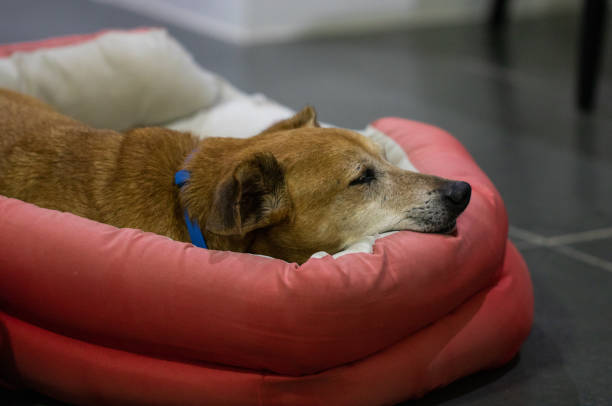
A dog’s cervical spine is actually more fragile than we imagine.
Many people believe that dogs are naturally active and energetic and that their necks are “strong and durable,” but the opposite is true.
A dog’s cervical spine consists of seven vertebrae, offering high flexibility and a wide range of motion, but this also means relatively weak stability. When a dog is sleeping or resting, if its neck is in an unnatural bent or suspended position for an extended period, it will put continuous pressure on the cervical spine.
The dog bed’s edge height on the cervical spine occurs in the following ways:
Is the neck forced to be raised or lowered?
Is there stable support for the head?
Can the sleeping position be maintained naturally?
These factors combined can directly affect whether a dog is prone to stiffness, frequent changes in posture, or even discomfort after waking up.
The importance of edge height in different sleeping positions
To understand the impact of the height of the dog bed edge on the cervical spine, we must first look at some common sleeping positions in dogs.
Sleeping on your side: the most common, but also the most dependent on the height of the edge.
When lying on their side, many dogs will rest their chin or neck on the edge of their dog bed. If the edge is at the right height to fit the curve of the neck, the cervical spine can remain relatively horizontal, and the muscles can relax naturally.
But if the edges are too high:
The neck was forced to bend upwards
Prolonged compression of one side of the cervical spine
If the edge is too low:
head lack of support
The cervical spine is suspended in the air, and the muscles remain tense.
This is the most direct manifestation of the effect of the dog bed edge height on the cervical spine.
Curled-up sleeping: Edge height affects the sense of security and also the angle of the neck.
When curled up, dogs often use the edge of their body as a “fence.” The right edge height allows the dog to form a natural curve, with its head and neck close to its body.
However, if the edge is too high, the head may be pushed up; if the edge is too low, the neck will lose its support.
Sleeping face down or lying prone puts the most pressure on the front of the neck.
Many dogs like to lie down, resting their chins on the edge of the dog bed to observe their surroundings. In this posture, the height of the dog bed edge has a particularly noticeable impact on the cervical spine.
The edges are too high: the front of the neck is pushed up, compressing the trachea and cervical spine.
Low-set edges: The chin hangs in the air, and neck muscles are chronically tense.
excessively high edge of a dog bed meant for the cervical spine?
Many high-sided dog beds that “look very safe” are not necessarily suitable for all dogs.
Potential problems include:
Tilting the neck upwards for extended periods can lead to muscle tension.
Frequently changing sleeping positions makes it difficult to enter deep sleep.
After waking up, it takes longer to stretch, and movements become sluggish.
Especially for small dogs, short-nosed dogs, or senior dogs, the impact of the dog bed edge height on the cervical spine is more easily amplified in high-edge designs.
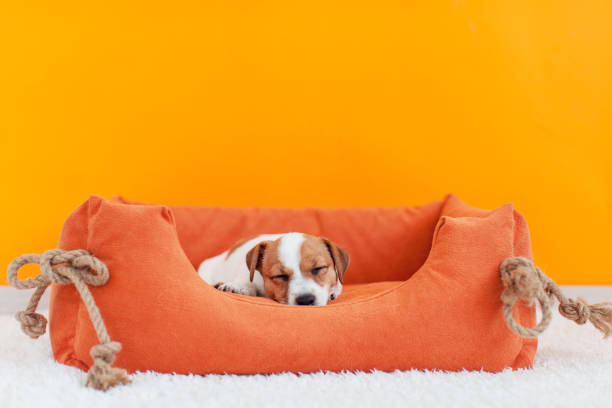
Is it necessarily good if the edges are too low?
Not entirely.
While a low edge avoids head-up pressure, it may lead to:
Lack of neck support
The head hangs down naturally when sleeping
Prolonged periods of time leaving the cervical spine in a “unsupported” state
From the perspective of cervical spine health, no support is not better than excessive support.
The right edge height is what’s truly gentle on the cervical spine.
In summary, under ideal conditions:
When a dog lies on its side, its head should be slightly higher than its body but not exceeding the natural neckline.
When sleeping on your stomach, your chin can rest gently on the edge of the head without having to lift your head forcefully.
When curled up, the neck can be “covered” by the edge, rather than being pressed against it.
This is precisely the healthiest and most comfortable balance point in the impact of the dog bed’s edge height on the cervical spine.
Different age groups have different needs for edge height.
puppy
The cervical spine is not fully developed
More importantly, soft, low- to medium-height edges are needed.
Avoid excessively high rigid edges
adult dog
Medium height can be selected according to body type
The key is whether there is elastic support at the edges.
senior dogs
Cervical spine degeneration, joint stiffness
Excessively high edges will significantly increase the burden on the neck.
More suitable for low-profile, gradual edge designs
For older dogs, the height of the dog bed edge often directly affects their cervical spine, directly impacting their willingness to lie down.
My dog used to use a high-sided dog bed, which seemed to provide a very snug fit. But I noticed that he would often change positions in the middle of the night and would always shake his neck in the morning.
a dog bed with slightly lower edges but a certain curvature for support, it slept much more soundly and got up more easily in the morning.
How to quickly determine if the edges of a dog bed are suitable?
You can make a judgment through these simple observations:
Does your dog often sleep with its head resting on the edge?
Do you frequently change your sleeping position?
After waking up, do you move around immediately instead of slowly freezing up?
If these results are all satisfactory, it indicates that the current edge height of the dog bed has a positive impact on the cervical spine.
Choosing a dog bed, don’t just look at how tall it is.
What truly matters is not simply the height, but rather
Does the edge have elasticity?
Does it match the dog’s shoulder and neck height?
Can you adapt to your natural sleeping position?
Height is just a number, but the impact of the dog bed’s edge height on the cervical spine depends on whether the overall design conforms to the body’s structure.
Summarize:
Many neck discomforts don’t appear suddenly but are the result of accumulated improper sleeping posture over a long period. A well-designed dog bed can reduce the burden on the cervical spine without you even realizing it.
If you notice your dog is restless during sleep, stiff when getting up, or always changing its sleeping spot, you might want to re-examine its resting environment from the perspective of how the height of the dog bed edge affects the cervical spine.
If you’re considering replacing your dog bed, it’s recommended to prioritize models with an edge height that conforms to the natural curve of your dog’s neck and provides gentle, non-firm support. A truly suitable dog bed isn’t just about providing a comfortable sleeping space; it’s about making your dog more relaxed every morning. Choosing the right dog bed for your dog starts with a neck-friendly edge height.