
When choosing a dog bed, most caregivers prioritize size, material, appearance, or ease of cleaning, but few seriously consider whether the weight of the dog bed will affect the dog’s willingness to use it.
In fact, weight is not a trivial parameter. It not only affects whether a dog is willing to approach, enter, and use the product long-term, but also indirectly affects the dog’s sense of security, rest quality, and even behavioral habits.
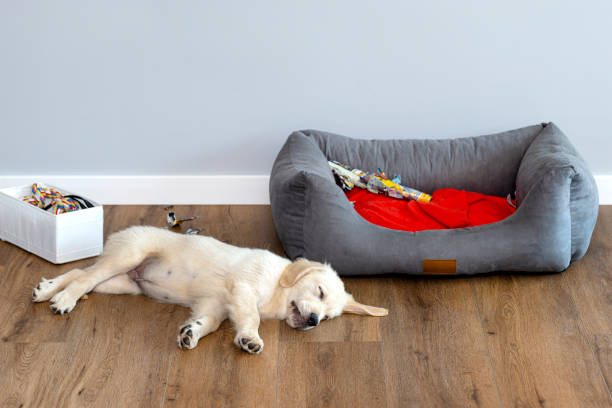
Do dogs really weigh themselves?
The answer is yes, and the degree varies from dog to dog.
Dogs don’t “weigh” themselves like humans, but they sense the weight of their dog bed in the following ways:
Is it difficult to push?
Is it stable when stepped on?
Will it slip when turning around or digging a nest?
Does displacement or sound occur when moving up and down the nest?
These feelings will form in the dog’s mind about whether “this place is safe.”
If the weight is not right, no matter how good the material or how high the price, the dog may just sniff it and walk away.
It seems convenient, but it actually has many hidden dangers.
1. Easily moved, reducing feelings of security.
A dog bed that is too lightweight can be easily pushed under the following conditions:
The dog spins around trying to find a pose.
Use front paws to dig a nest
When getting up or jumping in
The floor is made of smooth materials such as ceramic tiles or wood flooring.
For dogs, instability equals insecurity.
This is especially true for timid dogs and those sensitive to their environment, who may easily give up on using it because of this.
2. Easily treated as a “toy”
Puppies or energetic dogs may:
Bite the edge and drag it away
We once bought a very lightweight cloth dog bed for our dog, thinking it would be easy to move around. But after a few days, it was dragged to the middle of the living room and became a “chewable toy.” We later realized that its light weight actually made it unsuitable for the dog to use as a resting space.
Too heavy: More stable is not necessarily better.
Of course, heavier isn’t always better.
1. Not friendly to small dogs
For smaller, lighter breeds (such as Pomeranians, Chihuahuas, and Bichon Frises):
Rigid, bulky structures reduce comfort.
It can easily create a sense of oppression.
Dogs, especially younger ones or those whose joints are not yet fully developed, need light and gentle support.
2. Affects location flexibility
In a home environment, the dog bed is not always the same:
Put it in the living room during the day and in the bedroom at night.
In summer, place it near a well-ventilated area; in winter, place it near a heat source.
If the dog bed is too heavy, frequent movement will become inconvenient and eventually affect its usage frequency.
What benefits does the right weight bring to a dog?
1. A sense of stability increases the willingness to use.
A dog bed of moderate weight will not easily shift when the dog enters, exits, rolls over, or digs, which will help the dog develop a sense of “territory.”
This sense of stability can significantly increase a dog’s willingness to voluntarily enter the dog bed to rest.
2. Sense of security boundaries
For dogs, it’s not just a place to sleep but also a “private space.”
A dog bed with the right weight can help dogs establish clear spatial boundaries and reduce anxiety when disturbed.
3. Higher long-term usage rate
Aren’t “bad,” but rather “don’t last long.”
A dog bed with a reasonable weight can often last much longer.
Different dog sizes have different weight preferences.
small dog
Prefers light to medium weight
Stable but not bulky
Easy to get in and out, no feeling of pressure
medium-sized dog
Dog beds have the highest weight tolerance.
Stability is key
Too light or too heavy will reduce the experience.
large dogs
A more weight-oriented structure is needed
Prevent overturning and collapse
Provides a solid sense of support
If you are choosing a dog bed for a large dog, insufficient weight is often one of the main reasons for its failure.
A dog’s personality can also affect its perception of weight.
Timid and sensitive dogs
Prefers a stable, non-moving dog bed
Very sensitive to weight changes
Lively and active dogs
A certain weight is needed to prevent the nest from tipping over.
Too light and easily damaged
senior dogs
More stable support is needed
However, structures that are too heavy or too rigid should be avoided.
dog bed with a slightly heavier bottom. It hesitated for a moment when it first went in, but once it found that it wouldn’t slip no matter how it moved, it quickly lay down and fell asleep. From that day on, it basically only rested in that dog bed.
Relationship between dog bed weight and material
Different materials often directly determine the weight performance of a dog bed:
Fabric-filled type: lightweight and comfortable, but generally not very stable.
Memory foam type: Medium weight, balancing support and comfort.
Wooden or composite base: heavier, more stable
Plastic casing type: Significant weight difference; anti-slip design needs attention.
When making a purchase, it’s advisable to consider the “material + dog bed weight” as a whole, rather than looking at just one parameter.
How do you determine if the weight is “just right”?
You can test it using the following simple methods:
Gentle push test: Does the dog bed slide easily?
Nest-digging simulation: Simulates a dog digging its nest; does it shift its position?
Entry and exit test: How smoothly can the dog get in and out?
Continuous use observation: Whether the dog is willing to return to the same dog bed every day.
If your dog gradually gets used to using the dog bed within a few days, it means the weight of the dog bed is suitable for it.
Common misconception: Focusing only on weight and ignoring details
It is important to note that:
The right weight for a dog bed does not mean the heavier the better.
Anti-slip design is sometimes more important than simply adding weight.
Individual differences among dogs far outweigh the “standard answer.”
The best choice is a comprehensive judgment that takes into account the dog’s size, personality, and home environment.

Conclusion:
If you want your dog to truly enjoy using their old dog bed long-term, it’s recommended to prioritize a dog bed with a reasonable weight design, a stable base, and one that suits your dog’s size and personality.
Why not compare dog beds of different weights and structures now to find a dog bed that your dog can truly rest in peace in?